
An intensified DVAC probe into a multi-crore liquor scam, allegedly involving former DMK Minister V Senthil Balaji, has led to a suggestion to privatise retail liquor sales in Tamil Nadu. The investigation targets alleged collusion in TASMAC bar licences, transport tenders, and procurement, with the Madras High Court dismissing Balaji's anticipatory bail plea. The FIR details systemic corruption, significant revenue loss, and illicit fund generation, prompting political reactions.

The Department of Space has directed that requests for voluntary retirement or resignation from Group 'A' Scientific and Technical personnel associated with the prestigious Gaganyaan human spaceflight programme and other important missions should not be accepted as a matter of routine.

The Indian government has issued a notice to Telegram, demanding a crackdown on the widespread dissemination of pirated films and OTT content. The Ministry of Information and Broadcasting seeks an Action Taken Report within 15 days, emphasizing a shift towards platform accountability for copyright infringement, which is deemed a criminal offence.
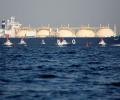
The government has withdrawn most provisions of the emergency natural gas supply regulation order imposed during the West Asia conflict after liquefied natural gas (LNG) shipments through the Strait of Hormuz resumed following a ceasefire.
Larger NGOs could no longer work with smaller ones, especially those organisations working on the ground that had no means of or expertise in raising money themselves, reveals Aakar Patel.

The government will lift restrictions on the sale of petrol and diesel to commercial and industrial consumers from July 1, easing emergency measures imposed to manage fuel supplies.

The National Testing Agency (NTA) and IIT Madras have justified the temporary restriction on Telegram ahead of the re-NEET examination, stating the platform was allegedly used to fabricate evidence of question paper leaks through edited messages with old timestamps, a claim criticised by the Internet Freedom Foundation as a 'disproportionate' response.
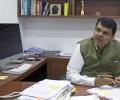
The Maharashtra government is forming a committee headed by the Director General of Police to address the issue of defamation through social media platforms. The committee will study the issue and suggest measures to take action against those who defame individuals through social media.

Meta's global team met with top Indian IT Ministry officials following government summons regarding the temporary restriction of Prime Minister Narendra Modi's Facebook post and ongoing concerns about child sexual abuse material (CSAM) on its platforms.

The move comes days after the Delhi police said false information linked to the recent students' protest was being circulated through fake social media posts.

The Maharashtra government has imposed a one-year ban on the manufacture and sale of "analogue" or non-dairy paneer due to public health concerns and widespread food safety violations. Offenders could face severe penalties, including life imprisonment and hefty fines, for misleading consumers with this lower-nutritional-value substitute.

The Supreme Court has informed the Centre that it will closely monitor the steps taken to curb NEET examination paper leaks, emphasising that 'ad hocism has caused trouble for years' and demanding a comprehensive overhaul of the examination process.

Ladakh Lieutenant Governor Vinai Kumar Saxena on Sunday approved a new Excise Policy, permitting the sale of hard liquor through retail vends, reducing documents to obtain a licence from 16 to six and extending the liquor availability to four more districts.
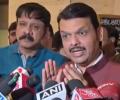
Following the deaths of 15-18 people in Pune and Pimpri Chinchwad due to spurious liquor, the Maharashtra government has suspended 22 police and excise department personnel for failing to act against the illegal liquor trade. Financial assistance has been announced for the victims' families, and a statewide crackdown on illicit liquor is underway.

Tamil Nadu minister Rajmohan has asserted the state government is taking proactive measures to curb crime against children, following the sexual assault and murder of a 10-year-old girl in Coimbatore. The minister detailed the government's approach of strict policing and public participation to prevent such crimes, while also hinting at the revival of student union elections in colleges across the state.

The Union Cabinet has approved a draft bill to introduce stricter punishments for examination paper leaks, following Prime Minister Narendra Modi's announcement. This new legislation builds upon the Public Examinations (Prevention of Unfair Means) Act, 2024, aiming to curb cheating in public examinations conducted by various central agencies amidst recent controversies like the NEET and NET paper leaks.

US President Donald Trump has signed two executive orders aimed at cracking down on 'birth tourism' and limiting eligibility for birthright citizenship, weeks after the Supreme Court rejected a similar directive.

The Public Examination (Prevention of Unfair Means) Amendment Bill, 2026, passed by the Lok Sabha, introduces significantly stricter punishments for individuals and organised groups involved in paper leaks and other unfair means in public examinations. The legislation aims to enhance the integrity of exams conducted by various central government agencies.

Tamil Nadu Governor RV Arlekar announced that the TVK regime, led by Chief Minister C Joseph Vijay, will take steps to ensure fair financial devolution from the Centre, including pursuing the matter in the Supreme Court. The government also plans to conduct a 'Social Justice Survey' and address the state's severe financial deterioration.

The Lok Sabha stalemate is expected to conclude as Speaker Om Birla has secured an agreement from all political parties to discuss the Public Examination (Prevention of Unfair Means) Amendment Bill 2026. This bill proposes stricter punishments, including up to 10 years in jail and a Rs 50 lakh fine, for paper leak offences, following recent nationwide student protests over the NEET fiasco.

The Congress party, through Deputy Leader Gaurav Gogoi, has criticised the proposed amendments to India's anti-paper leaks law, arguing that previous legislation has failed to prevent examination leaks. Gogoi highlighted the ongoing student protests and questioned the government's sincerity, particularly regarding the handling of the NEET fiasco and the welcome given to former Education Minister Dharmendra Pradhan. He also raised concerns about the National Testing Agency's accountability.

India anticipates a reduction in the United States' proposed tariffs on Indian goods under the Section 301 investigation, following New Delhi's recent notification to restrict the import of products made with forced labour.

The BJP is significantly increasing its digital engagement with young people on Instagram, led by Prime Minister Narendra Modi and several Union ministers, in response to the NEET-UG paper leak controversy and subsequent student protests. This strategic shift aims to counter the narrative and communicate government actions on examination reforms.

Following the change in the Education ministry, students involved in the CJP protests express hope for significant reforms. Their key demands include greater transparency in the exam system, affordable and quality education, and improved government schools, highlighting the widespread desire for a more equitable and effective education system in India.

The Delhi High Court has questioned the Centre's decision to temporarily restrict access to Telegram ahead of the NEET-UG 2026 re-examination, asking how the rights of 150 million users can be curtailed due to concerns over a few miscreants. The court reserved its verdict after hearing arguments from both sides.

Kerala Home Minister Ramesh Chennithala has declared that the state government will have 'zero tolerance' towards political murders, following concerns over parole granted to those accused in the 2019 Periya twin murder case.
Tamil Nadu government is taking proactive measures to curb crime against children, following the sexual assault and murder of a 10-year-old girl in Coimbatore. The government is focusing on strict policing, public awareness, and swift justice through fast-track courts.

Russia's Federal Security Service (FSB) has charged Telegram co-founder Pavel Durov with facilitating terrorist activities and initiated procedures to place him on the international wanted list, according to Russian state-run news agency TASS.

After six days of stalemate, a discussion on the anti-paper leak bill began on Tuesday in Lok Sabha with the government describing it as a reaffirmation of ruling dispensation's commitment to safeguard the welfare of students but opposition hit back over the lathi-charge on protesters, saying every blow on them hurt the government's prestige more than the backs of the youth.

Kerala Women and Child Development Minister Bindu Krishna revealed she was voyeuristically filmed during a school event in Kollam, prompting her to advocate for a comprehensive state policy to combat digital harassment against women.

Union Education Minister Dharmendra Pradhan has resigned from his post, stating he sent his resignation to Prime Minister Narendra Modi to prevent 'anti-national forces' from exploiting the situation arising from widespread protests over examination irregularities.

Experts urge internet platforms to adopt prevention-by-design and stronger AI systems to curb child sexual exploitation material and improve online child safety.

Amidst widespread student protests over the NEET paper leak, the Indian government has introduced the Public Examinations (Prevention of Unfair Means) Amendment Bill, 2026, in the Lok Sabha. The bill proposes significantly stricter punishments, including jail terms of up to 10 years and fines of up to Rs 50 lakh for individuals involved in paper leaks, and up to Rs 10 crore for organised crimes, aiming to enhance transparency and fairness in public examinations.

West Bengal has enacted two controversial legislations, the Public Safety and Control of Anti-Social Activities Act and the Maintenance of Public Order (Amendment) Act, aimed at curbing organised crime and violent protests. These laws grant authorities significant powers, including preventive detention without trial and property attachment for riot damages, drawing both support and criticism.

Monday's proceedings demonstrated that the legislative debate has become inseparable from the broader political crisis surrounding the NEET controversy.

India is set to introduce a new amendment to its anti-paper leak law in the Lok Sabha, aiming to establish fast-track courts across all states and union territories for swift trials and significantly harsher penalties for exam malpractices, including jail terms of 5 to 10 years and fines up to Rs 50 lakh for individuals, and up to Rs 10 crore for organised crimes.

The Indian government has imposed import restrictions on all forms of gold, silver, and platinum articles to prevent misuse of free trade agreements (FTAs). The restrictions apply immediately, regardless of prior contracts or commitments.

The Congress-led Opposition is set to keep the pressure on the government in Parliament over the alleged police brutality against protesting students, demanding action against those responsible for the assault and an apology from Prime Minister Narendra Modi, sources said on Sunday.
Google has removed the messaging app Telegram from its Play Store in India, with Apple expected to follow, in compliance with a government order aimed at preventing paper leaks during the upcoming NEET-UG re-examination on June 21. The government has also directed Telegram to temporarily disable its message-editing feature until June 30.

Central tax authorities detected input tax credit (ITC) fraud worth Rs 74,781.56 crore across 30,162 cases in FY26, more than doubling the number of cases from the previous year, according to the Ministry of Finance.
